Our Services
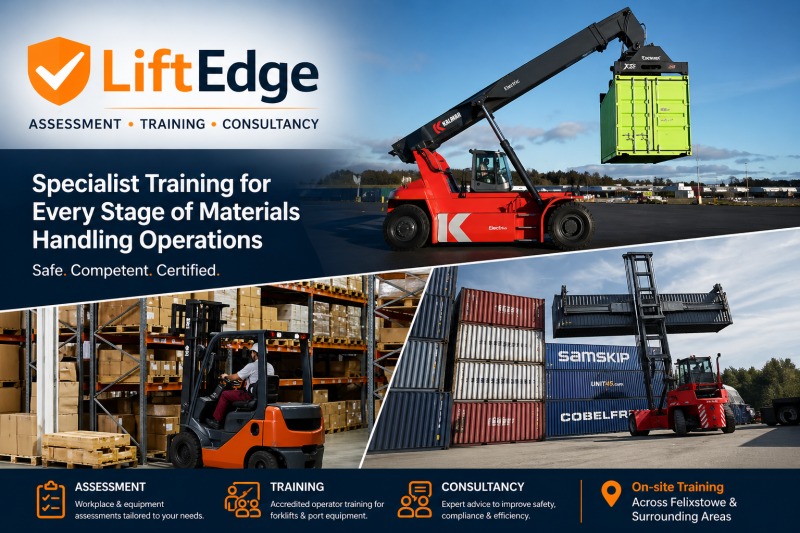
LiftEdge provides professional operator training, competence assessments and workplace operational reviews for businesses operating forklift trucks, warehouse equipment and specialist container-handling machinery.
Training is delivered at your workplace using the equipment and operating conditions relevant to your business, helping operators develop the knowledge, practical skills and judgement required to work safely and competently.
Every programme is tailored to the operator, equipment and tasks involved. The focus is on effective training, measurable competence and practical improvement — not a one-size-fits-all course.
Operator Assessments
LiftEdge provides structured assessments to help employers understand operator capability, identify training needs and maintain workplace standards.
Training Needs Assessments
Used where an operator’s previous experience, training history or current ability needs to be established before deciding the appropriate training route.
This can help determine whether the operator requires basic, refresher, conversion or remedial training.
Periodic Competence Assessments
Structured evaluations carried out at intervals determined by operational risk, employer policy, workplace changes and operator performance.
Post-Incident and Return-to-Work Assessments
Focused assessments following an incident, near miss, period away from operating duties or concerns about operator performance.
The purpose is to identify whether additional training or support is required before the operator returns to normal duties.
Clear Outcomes
Following an assessment, LiftEdge provides clear feedback identifying:
- areas of competence;
- areas requiring improvement;
- any significant safety concerns;
- recommended training or reassessment;
- appropriate next steps.
Forklifts & Warehouse Equipment
LiftEdge provides training and assessment across a range of warehouse and industrial lift trucks, including:
- Counterbalance Forklifts
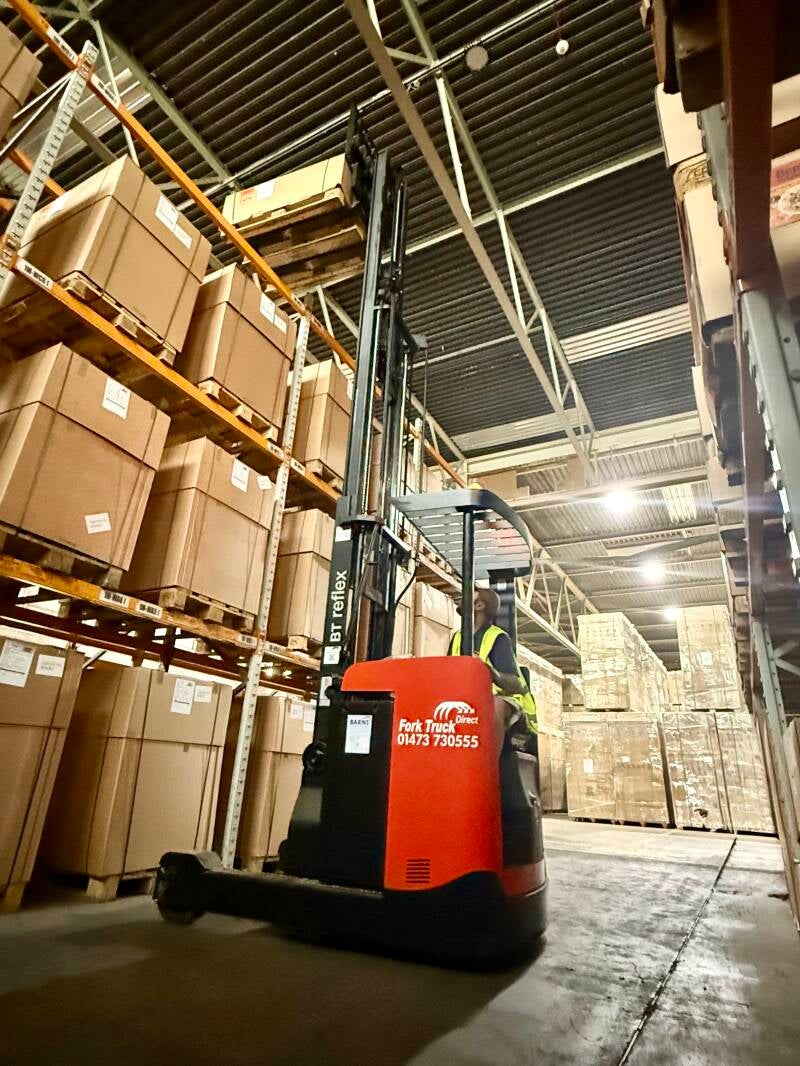
- Reach Trucks
- Manual and Powered Pallet Trucks
- Low-Level and High-Level Order Pickers
- Powered Stackers
Training covers safe operation, pre-use checks, stability, load handling, travelling, stacking and de-stacking, visibility, pedestrian awareness and safe working practices.
Equipment categories not listed above may be considered following discussion of the machine, operator requirements and site conditions.
Container‑Handling Equipment
LiftEdge also provides specialist training and competence assessment for equipment used within container depots, logistics yards and port-related operations.
This includes:
- Reach Stackers
- Empty Container Handlers
- Container-Handling Lift Trucks
Training can cover:
- pre-use inspection;
- safe travelling and positioning;
- container handling and stacking;
- stability and load-centre awareness;
- visibility and restricted operating areas;
- equipment controls and handling attachments;
- safe interaction with vehicles and pedestrians;
- site-specific operational risks.
Other specialist equipment may be considered by prior agreement, subject to equipment type, training requirements and suitability.
Training Types
Basic Training
For new or inexperienced operators.
Basic training develops the fundamental knowledge and practical skills required to operate the relevant equipment safely and competently.
Training is delivered using suitable equipment within an appropriate training area away from normal production pressures.
Specific Job Training
Training relating the operator’s basic skills to the specific equipment, attachments, loads, workplace conditions and tasks they will encounter.
This can include:
- equipment controls and operating characteristics;
- load types and handling requirements;
- racking and stacking systems;
- site layout and traffic routes;
- gradients and surface conditions;
- pedestrian interaction;
- restricted areas;
- workplace procedures and safe systems of work.
Specific Job Training is carried out away from normal production pressures.
Familiarisation Training
Familiarisation allows an operator to apply previously learned skills under normal workplace conditions.
It takes place on the job under close supervision by someone with appropriate knowledge after the relevant Basic and Specific Job Training has been completed.
Employers remain responsible for ensuring adequate workplace familiarisation and operator authorisation unless LiftEdge has specifically been engaged to support this stage.
Refresher Training
Targeted training for previously trained operators who need to maintain, update or strengthen their skills.
Refresher training may be appropriate following:
- unsafe operating practices;
- an accident or near miss;
- a significant workplace or equipment change;
- extended absence from operating;
- concerns identified through workplace monitoring or assessment;
- a planned periodic refresher programme.
There is no legally prescribed refresher interval. Employers may choose a periodic programme — for example every 3–5 years depending on risk — alongside ongoing workplace monitoring.
Remedial / Corrective Training
Focused training for operators where an assessment, incident or workplace observation has identified unsafe habits or gaps in competence.
Training concentrates specifically on the areas requiring improvement rather than unnecessarily repeating material the operator already understands.
Conversion Training
For trained and experienced operators moving to a different category or type of equipment.
Examples include:
- Counterbalance to Reach Truck
- transition to another lift-truck category;
- introduction of significantly different controls or operating characteristics;
- use of different handling attachments.
Conversion training is tailored to the differences between the equipment categories and includes appropriate training and assessment.
HSE specifically recognises conversion training where an already trained operator moves to another category of lift truck.
Manual Handling Training
LiftEdge also provides practical workplace Manual Handling Training designed to help employees recognise manual-handling risks and use safer working techniques.
Training can be adapted to the tasks carried out within your workplace and may include:
- understanding manual-handling risk;
- safer lifting and carrying techniques;
- pushing and pulling;
- team handling;
- workplace-specific handling tasks;
- practical ways to reduce unnecessary manual handling.
How LiftEdge Training Works
Training is built around the operator, equipment and working environment.
Where appropriate, we begin by reviewing existing competence and identifying the areas that genuinely require attention.
This allows training to be targeted rather than simply repeating a generic programme.
Depending on the requirement, this may involve:
Assess → Identify → Train → Reassess
or, where the training requirement is already clear:
Train → Assess → Certify
Throughout the process, essential theory is combined with practical, hands-on training and assessment.
Training at Your Workplace
LiftEdge normally delivers training on the customer’s premises using the equipment operators will encounter in their workplace.
For Basic and Specific Job Training, an appropriate area must be available away from normal production pressures.
The customer should also ensure that suitable equipment, loads and facilities are available and that equipment is safe, serviceable and appropriately inspected.
This helps ensure training is both relevant and delivered under suitable conditions.
Feedback and Certification
At the completion of training or assessment, appropriate feedback is provided to the operator and employer.
Where the required standard has been achieved, relevant LiftEdge certification and training records are issued.
Where further development is required, LiftEdge will provide clear recommendations rather than simply recording a pass or fail.
The employer remains responsible for workplace authorisation, supervision, monitoring and ensuring operators remain competent for the equipment and activities they undertake.
Workplace Operational Reviews
LiftEdge can provide practical observational reviews of forklift and equipment operations within the workplace.
Reviews can help businesses identify:
- unsafe operating behaviours;
- training and competence gaps;
- pedestrian and vehicle interaction issues;
- areas where operating procedures may require review;
- opportunities to improve operator standards.
Recommendations are practical and focused on operator competence and equipment use.
LiftEdge operational reviews do not replace the employer’s own statutory risk assessments, equipment examinations or formal health and safety responsibilities.
Raising Standards Through Competence
LiftEdge training is designed around a straightforward objective:
competent operators, safer workplaces and practical standards that work in the real world.
Whether you require operator training, conversion training, refresher training, competence assessment or support following an incident, LiftEdge can develop a programme around your equipment and operational requirements.